-
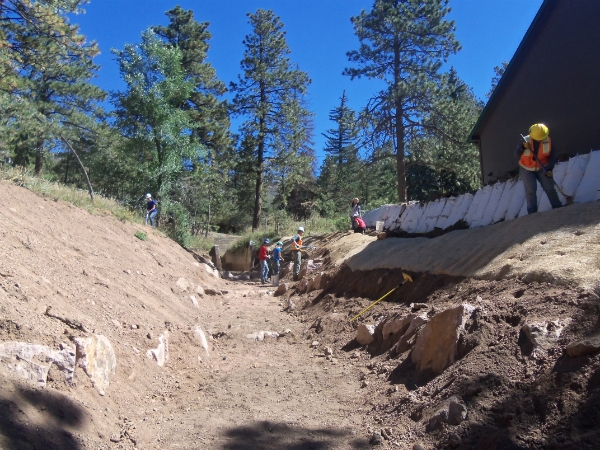 Channel stabilization is important for protecting lives and property in a post-fire environment. Flooding and debris flows are amplified for years following a catastrophic fire.
-
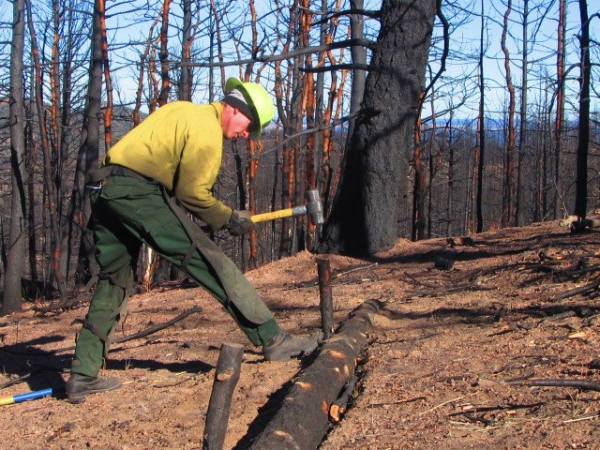 Log erosion barriers are placed across the contours of the hillslopes to reduce erosion by slowing water and trapping sediment.
-
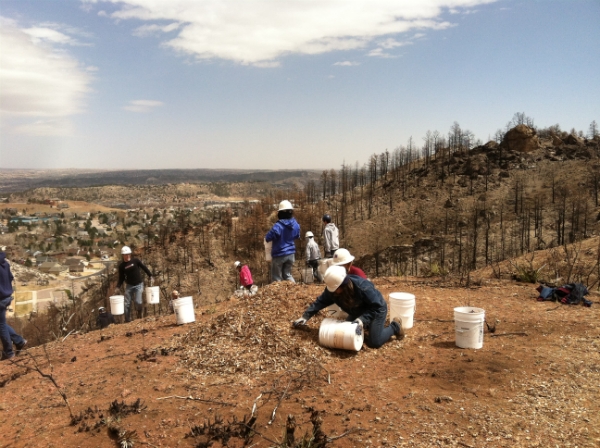 Seeding and mulching are important emergency stabilization steps following a fire.
-
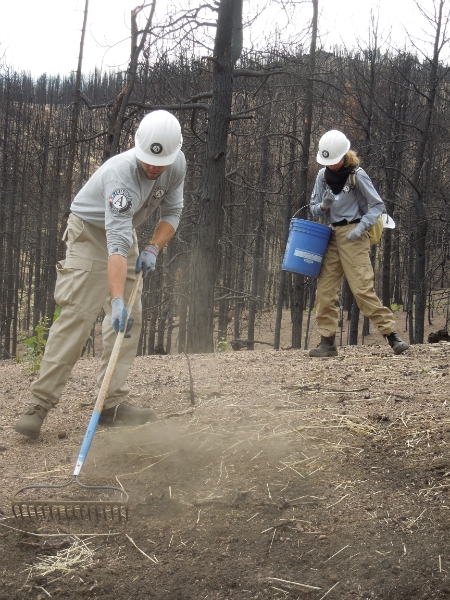 Raking and seeding promotes the growth of nurse crops that provide ground cover and slow the flow of water to reduce erosion in the first few years following a fire. Native grasses are also seeded to provide long term soil stabilization with their network of deep roots.
-
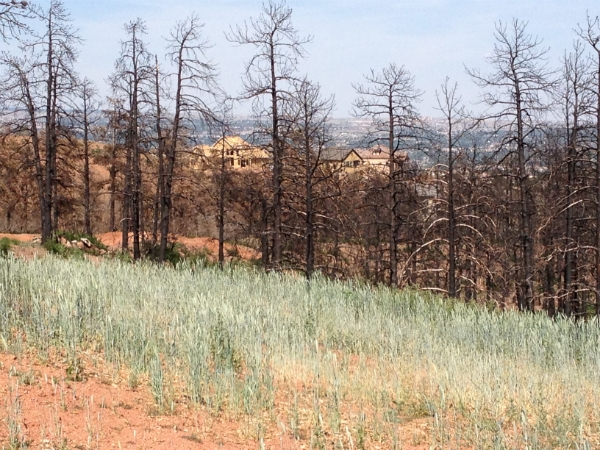 Grasses seeded by CUSP volunteers help stabilize soils and are a positive sign of recovery!
-
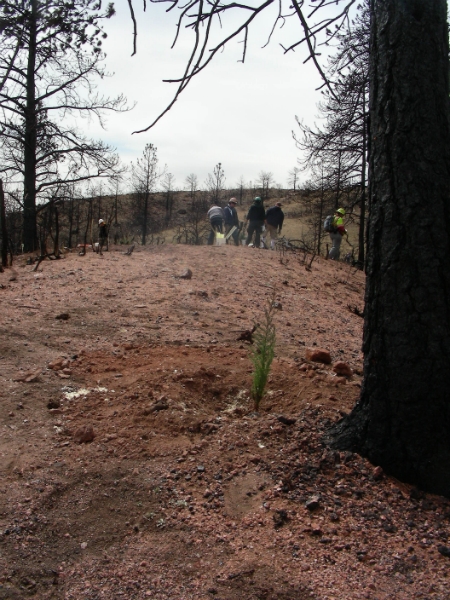 After initial emergency stabilization steps, saplings are strategically planted in areas where they are most likely to survive and have the greatest ecosystem benefit.
-
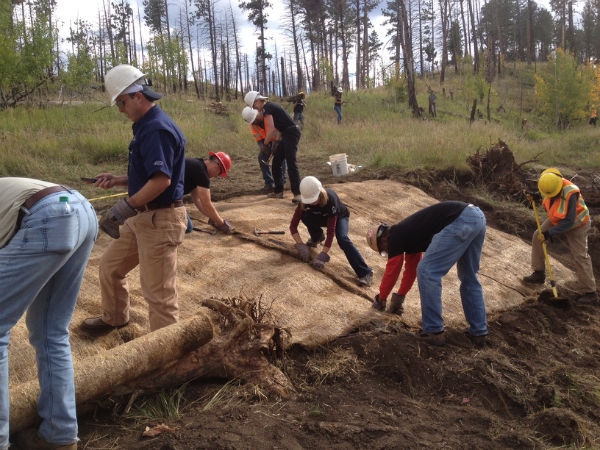 Over a decade later, re-seeding and erosion control projects continue to help the 2002 Hayman burn scar heal.